

TreasurySpring
Friday, Mar, 20, 2026
Share:
This commentary follows the FOMC's update and is the opinion of TreasurySpring's capital market experts, Glen Stone and Nigel Owen, and does not constitute legal, investment, or other advice.
- Federal Open Market Committee (FOMC) voted 11-1 for no cut (one vote for a 25bp cut)
- Dot plot shows the same median, but a narrower variety of views
- One cut before year end is the most popular opinion amongst FOMC members
- Powell: "The implications of developments in the Middle East for the US economy are uncertain."
What has changed since the last meeting?
In the lead-up to the Middle East conflict, February’s non-farm payrolls print showed the US economy unexpectedly losing 92,000 jobs versus an expected gain of 55,000.
A slight increase in the unemployment rate to 4.4% had traders pricing in a little over two cuts for the remainder of 2026: one around July and the other before the end of the year, despite Fed members repeating the mantra that they only saw one cut in 2026.
However, inflation remains persistent, something the minutes of the last Fed meeting highlighted. Core PCE rose for a second consecutive month in January, to 3.1%.
The war in Iran will increase inflation, but the size and length is the great unknown right now.
What has to be considered from here?
The impact of the war on the size and duration of the boost to inflation will be the key consideration for the FOMC.
There is still a strong belief in the US growth story, but might that be affected by increased energy prices? The important factor may prove to be consumer affordability.
What do the shifts in the market-implied rates and dot plots tell us?
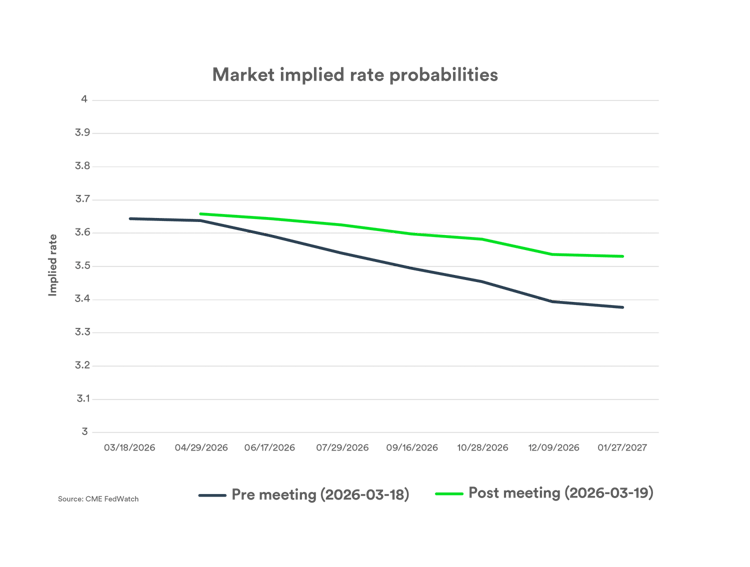 The market seems to have moved to align itself to the FOMC’s view on the remainder of the year: one cut most likely, but if not, no cut. A hike still looks a pretty low probability event, whichever chart you look at.
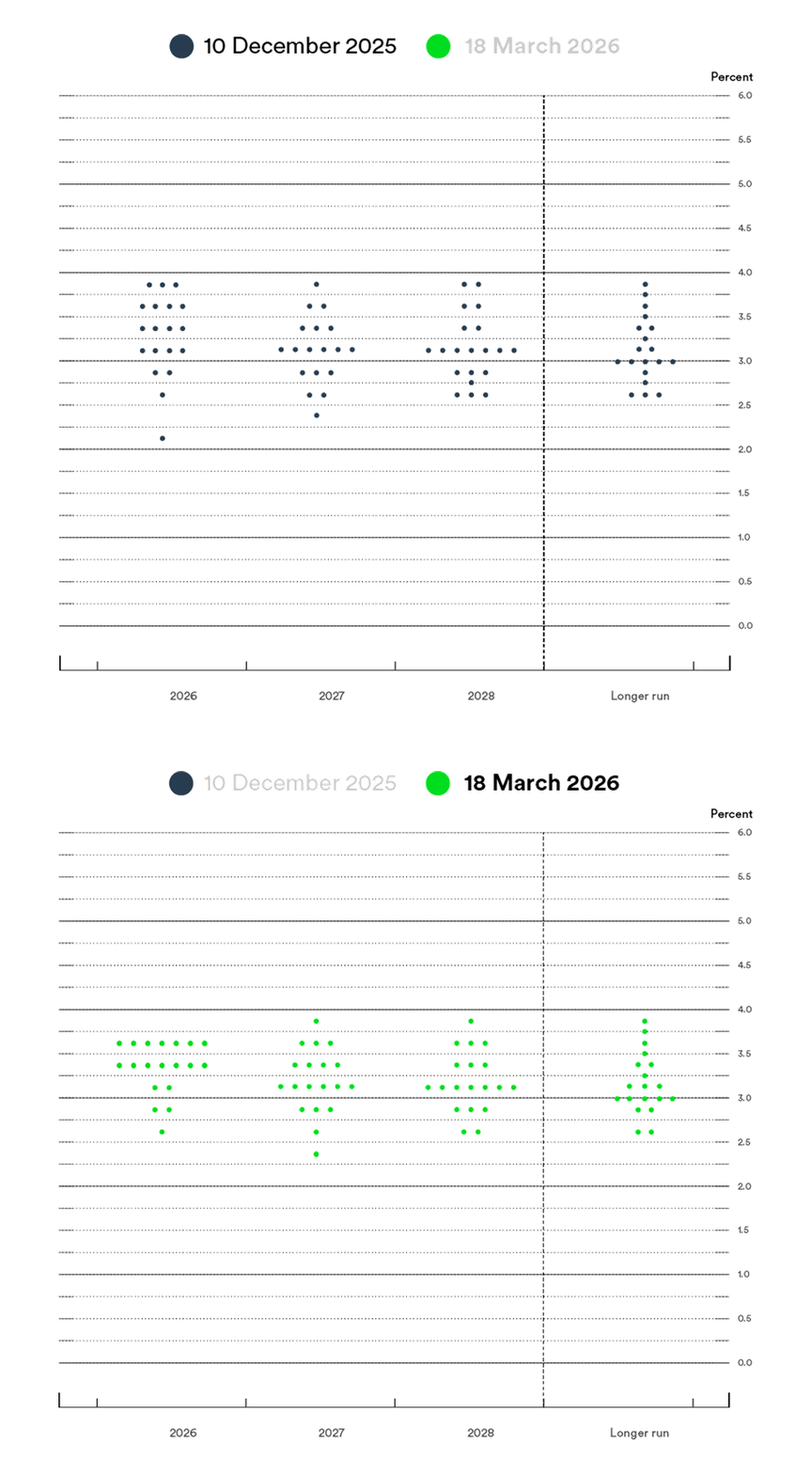 The concentration of FOMC views may be due to greater uncertainty. It is difficult to predict anything from here.
It also seems that we still haven’t seen the full effect of tariffs feeding through, meaning inflation may have remained well above the 2% target for some time, even without the effects of the war in Iran on energy prices. (Source)
What about Jay Powell’s position?
It seems that political manoeuvring will play its part here. Powell is now pledging to stay on until the DoJ investigation concludes or is thrown out, allied to Thorn Tillis' attempt to block the nomination of Powell's would-be successor, Kevin Warsh, from advancing. So we could see Powell still in the Chair beyond the next meeting.
Warsh’s voting history has marked him out as hawkish, but recently he has moved firmly into the President's view with a more dovish view or stance towards cutting rates. So we do need to watch if Powell is staying or is going to give up the chair, and then whether he will stay on as a rank and file member or will step away entirely. (Source)
What to watch for before the next meeting?
The war in Iran is the obvious one, but it is the pass-through effects on inflation, consumer spending, and growth in the economy that will affect the Fed’s thinking between now and the next meeting.
The development of the case against Powell and the impact on the approval of Warsh and his potential change of direction to the FOMC will be important too.
Watch the webinar recording
More from TreasurySpring
TreasurySpring’s blogs and commentaries are provided for general information purposes only, and do not constitute legal, investment, or other advice.