

TreasurySpring
Friday, Dec, 12, 2025
Share:
This commentary follows the FOMC's update and is the opinion of TreasurySpring's capital market experts, Glen Stone and Nigel Owen, and does not constitute legal, investment, or other advice.
Rate decision:
- Federal Open Market Committee (FOMC) voted 2-9-1 for a 25bp cut (one vote for 50bp, two for no change)
- Powell: “We're well positioned to wait and see how the economy evolves from here… We are in the high end of the range of neutral"
- Dot plot forecasts one rate cut in 2026 and one in 2027
- Fed announced plans to resume buying of Treasury securities, starting with $40bn of T-bills on 12 December
What has changed since the last meeting?
The absence of data due to the Government shutdown made this a difficult meeting to unpack. Jobs data has been reasonably robust, inflation remains fairly sticky, but a pivot in market expectations of a cut came when New York Fed President John Williams said in a speech he saw “room for a further adjustment in the near term to the target range for the federal funds rate”.
But an extra dissenter on the side of no cut suggests some policymakers may believe the Fed is at or close to the neutral rate, where it's no longer acting to stimulate or contract economic action.
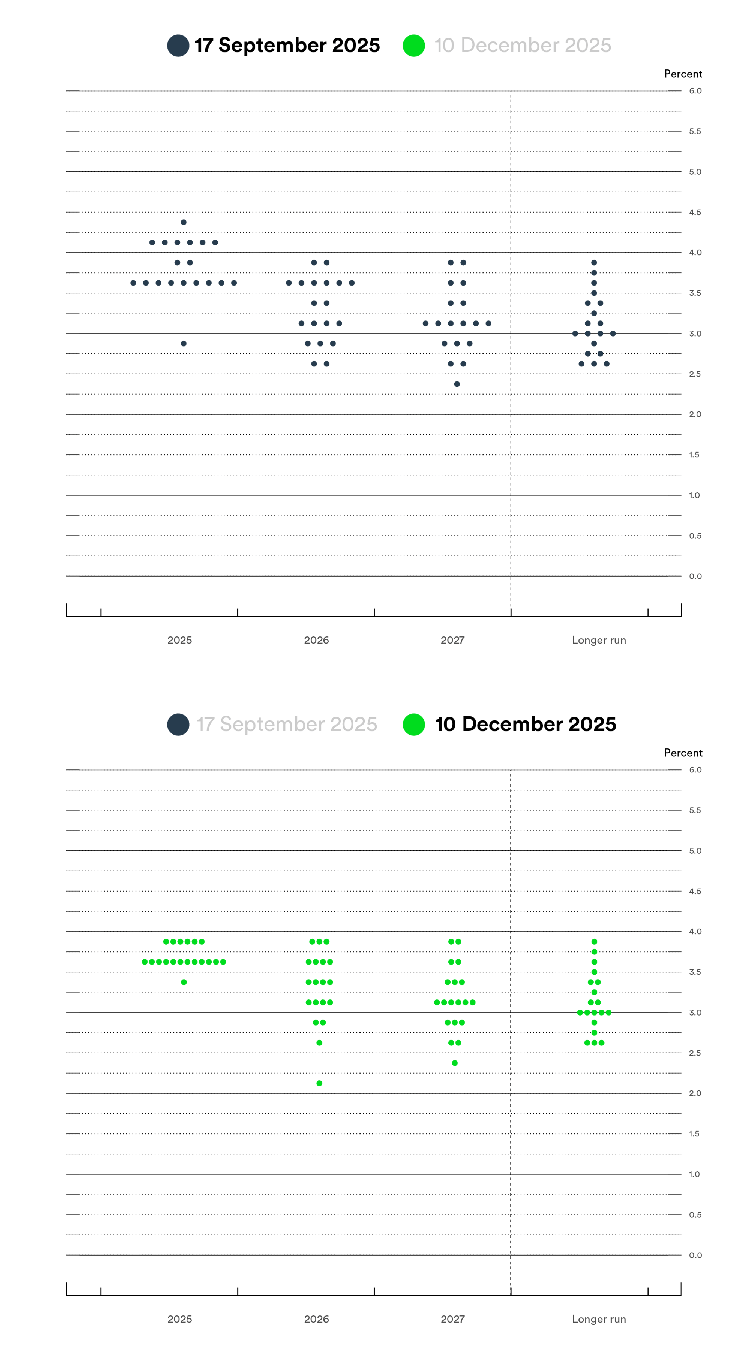
Source: https://www.federalreserve.gov
What does the dot plot tell us?
The dot plot shows one rate cut is forecast for 2026, and one for 2027, but there is greater variety in forecasts for 2026 than the following year. This again shows how difficult a balancing act the Fed has here. US inflation is still running at 2.8% year-on-year, so well above the Fed's 2% target. It's almost as if high inflation is the new normal: the last 0.2% month-on-month PCE data increase barely caused a ripple in markets, as this was widely expected.
We now generally believe inflation may be falling. Inflation swaps have implied that the one-time price effect of tariffs looks to be contained by the end of 2026, and the Fed is now saying they see their 2% target to be reached by 2028.
What has to be considered from here?
- Where does unemployment go from here? Can job openings numbers remain healthy?
- What effect will AI have on the economy in 2026?
- Who replaces Powell as Chair of the Fed and how independent will they be?
- For how long and at what pace does the buying of Treasury securities run at? What will be the effect of this on short-end rates?
- Political issues on the horizon including another possible Government shutdown in January, and mid-terms in November.
What is the market expecting?
CME FedWatch is showing a 75% chance of no cut in January. That feels low even at that elevated level given the messaging from Powell in his press conference. March is still balancing towards no cut with 52% implied there, but Glen isn’t ruling that out as a live meeting.
 Source: https://www.cmegroup.com/markets/interest-rates/cme-fedwatch-tool.html
What to watch out for in January?
The next meeting is on 28 January. The Government could shut down on 30 January. Try to read the room approaching that week.
China is likely to remain a significant global determinant in 2026: any shift in sentiment on the US-China trade deal may shift markets. And there are other tariff agreements which still require further negotiation before being signed.
It feels too soon to be talking about rates going up in the US, but this could be revisited mid-year when Powell is replaced and other central banks could be closer to making that change in policy.
Watch the webinar recording
More from TreasurySpring
Subscribe to our WTFTF Newsletter
Stay in the loop with Henry Adam's latest insights and get exclusive updates from TreasurySpring every month.
Your weekly data commentary: Five to Follow
Catch Nigel Owen's latest insights each week on LinkedIn.

TreasurySpring’s blogs and commentaries are provided for general information purposes only, and do not constitute legal, investment, or other advice.